
Currently Empty: £0.00

Brough Superior
- Home
- Brough Superior

HAVOC Watches are delighted to announce our partnership with Brough Superior – legendary brand of ultra-luxury hand built motorcycles.
Favoured transport of Lawrence of Arabia, the Brough Superior SS80 is widely regarded as the Rolls Royce of motorbikes – we are honoured to offer a timepiece which pays homage to this legend of transport.
The Brough Superior SS80 was officially presented to the public in November 1922 at the British Olympia Motorcycle Show in London. The SS in its name stands for Super Sports, and the 80 represents George Brough’s ground-breaking guarantee that every bike could reach and sustain speeds of 80mph.
With only 1,086 SS80s ever hand-built, this icon of British transport is as rare as it was revolutionary. The SS80 stood out as one of the earliest expressions of what a high-performance motorcycle could be – setting a benchmark for refinement and speed in the early 1920s.
The SS80 combined meticulously selected components with precision assembly and tuning to deliver unusual consistency for its era. Its significance was not only its performance but the way it balanced speed with mechanical durability – offering sustained high-speeds without the fragility associated with early motorcycles. The SS80 was the first motorcycle tested to hold 80 mph reliably rather than just briefly achieve it. This emphasis on sustained performance mattered more than headline speed, because early engines and tyres were often stressed by heat, vibration and poor road surfaces over long distances.
This combination of reliability, engineering precision, and exceptional pace made the Brough Superior SS80 a reference point for performance motorcycling and helped establish a new expectation for what a premium machine could achieve.
In partnership with Brough Superior, HAVOC Watches are proud to offer the HAVOC SS80. Emblazoned with the iconic Brough Superior SS80 logo, this timepiece reflects our shared philosophies on precision, innovation and reliability under pressure.
The Brough Story
The Brough story begins in the early years of British motorcycle experimentation, when engineers were still working out what a high-performance machine should look like. The early 1900s William E Brough machines were relatively conventional for their time, but they established a crucial base of engineering knowledge: frame construction, engine integration and the pursuit of reliability at a time when mechanical failure was still common.
His son, George Brough, became the driving force behind what would later become the Brough Superior identity. A skilled rider and tester, he quickly developed a reputation for pushing machines beyond their intended limits and identifying weaknesses in design. Rather than accepting standard factory output, he focused on refinement – improving handling, finish and consistency.
In 1919 he founded Brough Superior, deliberately choosing the word “Superior” as a public statement of intent. It was not subtle branding; it was a challenge to every other motorcycle maker in Britain.
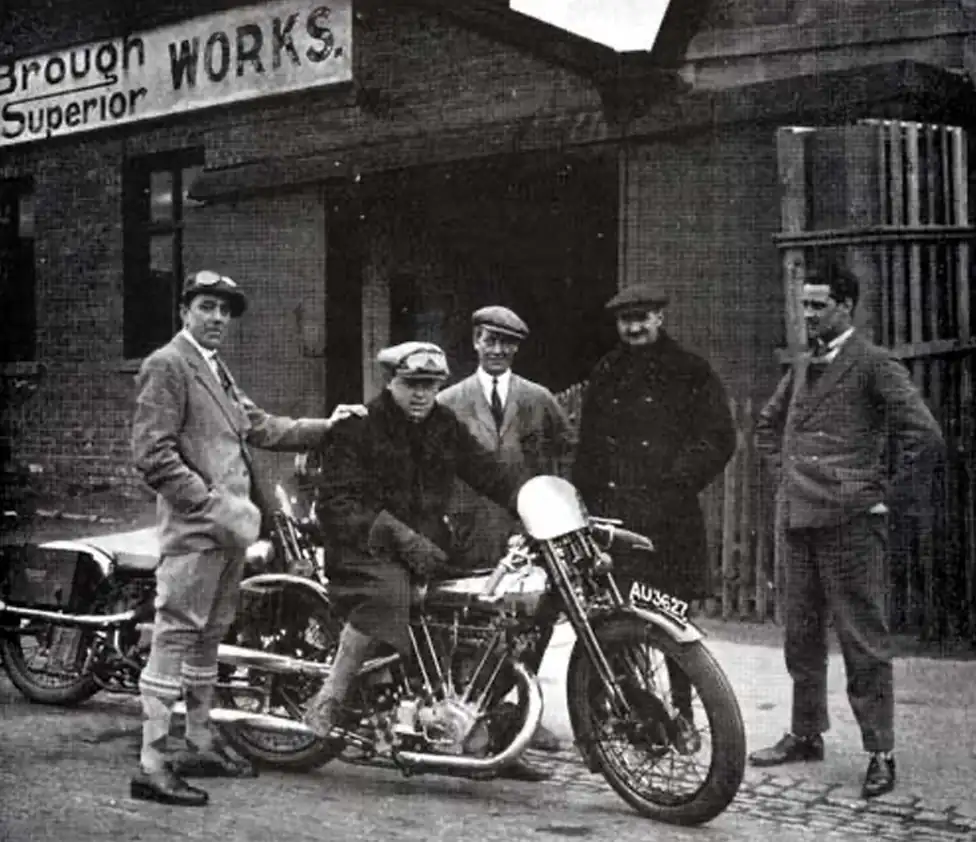
From the outset, the company adopted a radical low-volume, highly individualised production approach. Unlike manufacturers mass producing thousands of identical machines, Brough Superior motorcycles were built in very small numbers – even at peak production, often only a few hundred per year. Total output over the company’s original lifespan is estimated at 3,000-4,000 machines.
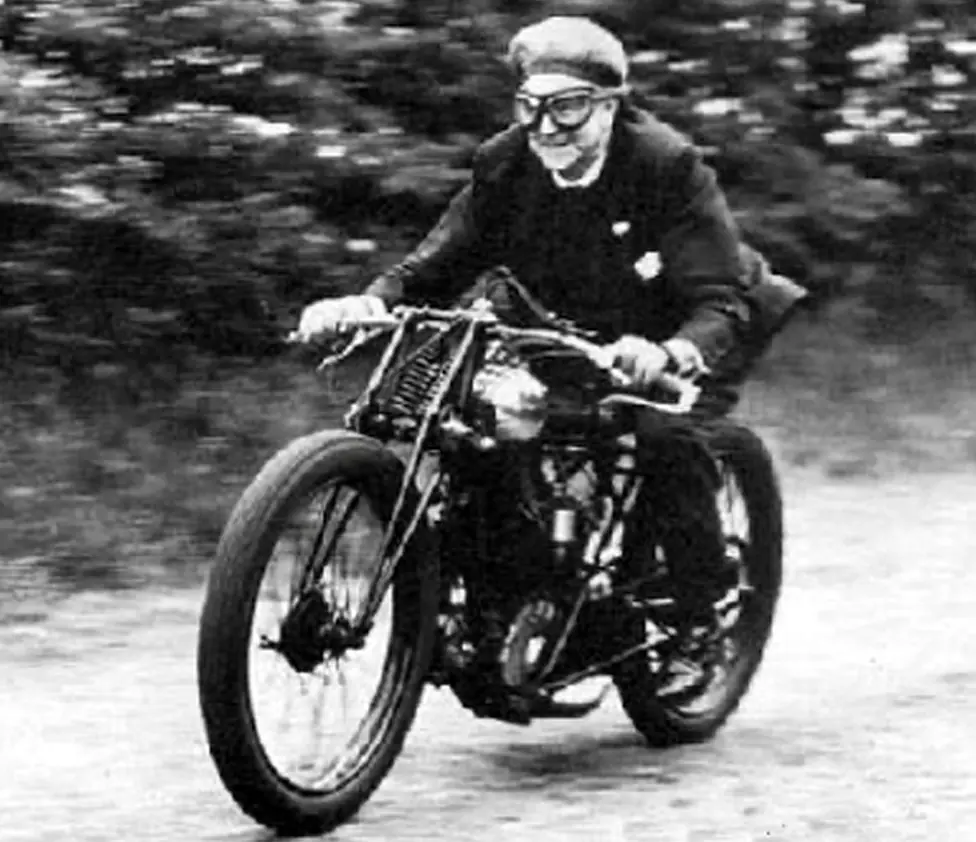
A key feature of the brand was its use of specialist components combined into bespoke assemblies. Engines were not typically manufactured in-house but sourced from respected engineering firms such as J.A. Prestwich Industries. These engines were then carefully selected, tuned, and integrated into Brough’s own chassis designs. This allowed the company to focus on precision assembly and performance tuning rather than full engine production.
Early models such as the SS80 and SS100 became defining machines for the brand. The SS80 was designed to reliably reach 80mph, while the SS100 aimed for 100mph – figures that were extraordinary for the early 1920s. At a time when many motorcycles struggled to exceed 50 mph consistently, these performance targets placed Brough Superior in a category of its own.
The finish quality also set the brand apart. Polishing, plating and detailing were carried out to exceptionally high standards, giving the motorcycles a reputation for both mechanical excellence and visual refinement. Buyers were not just purchasing transport; they were commissioning high-performance engineering tailored to exacting standards.
The combination of rarity, performance and craftsmanship quickly made Brough Superior machines highly desirable. Even decades later, surviving examples are among the most valuable vintage motorcycles in the world, with some models achieving auction prices well into six figures.
In essence, the origin of Brough Superior lies in a philosophy rather than a single invention: that motorcycles should not only be fast, but built with uncompromising precision, individuality and attention to detail.
A skittish motorbike with a touch of blood in it is better than all the riding animals on earth. It is the silkiest thing I have ever ridden.
T E Lawrence
A skittish motorbike with a touch of blood in it is better than all the riding animals on earth. It is the silkiest thing I have ever ridden.
T E Lawrence
Lawrence of Arabia: Brough Superior Superfan
T E Lawrence was one of the most recognisable figures of the Great War – mainly because of his role in the Arab Revolt against Ottoman rule between 1916 and 1918. A trained archaeologist, he was drawn into British military intelligence due to his knowledge of the Middle East, fluency in Arabic and understanding of tribal politics. Skills that would prove decisive in irregular warfare.
His reputation rested not on rank but on results achieved in extreme conditions. Working with limited resources and no conventional command structure, he helped coordinate Arab irregular forces in a campaign built on mobility, sabotage and disruption rather than set-piece battles. One of his most significant achievements was his involvement in the capture of Aqaba in 1917. Approached over an unforgiving desert route and struck from an unexpected direction, the operation overcame a position which was considered secure from land attack. The victory provided a vital supply point and strengthened the Arab strategic position.
He also played a central role in the sustained disruption of the Hejaz Railway, key desert supply line of the Ottoman Empire. Small, fast-moving raiding groups repeatedly targeted bridges, tracks and stations, forcing the diversion of substantial enemy manpower into repairs and protection. Though tactically modest in scale, these attacks had huge strategic impact by slowing movement and communication across the region.
By the end of the conflict, Lawrence had become both a practical asset and a symbolic figure. He received several British honours, including the Distinguished Service Order and appointment as a Companion of the Order of the Bath. He was also promoted within the military establishment, though his most significant contribution remained his leadership in unconventional operations rather than formal command. His role at the 1919 Paris Peace Conference, arguing for Arab independence, further raised his profile, even if the political outcomes fell short of his aims.
After the war, he deliberately distanced himself from public life, enlisting under assumed names in the Royal Air Force and later the Royal Tank Regiment. He was deeply uneasy with the celebrity status that had formed around him and with the simplified myth of “Lawrence of Arabia” circulating in the press.
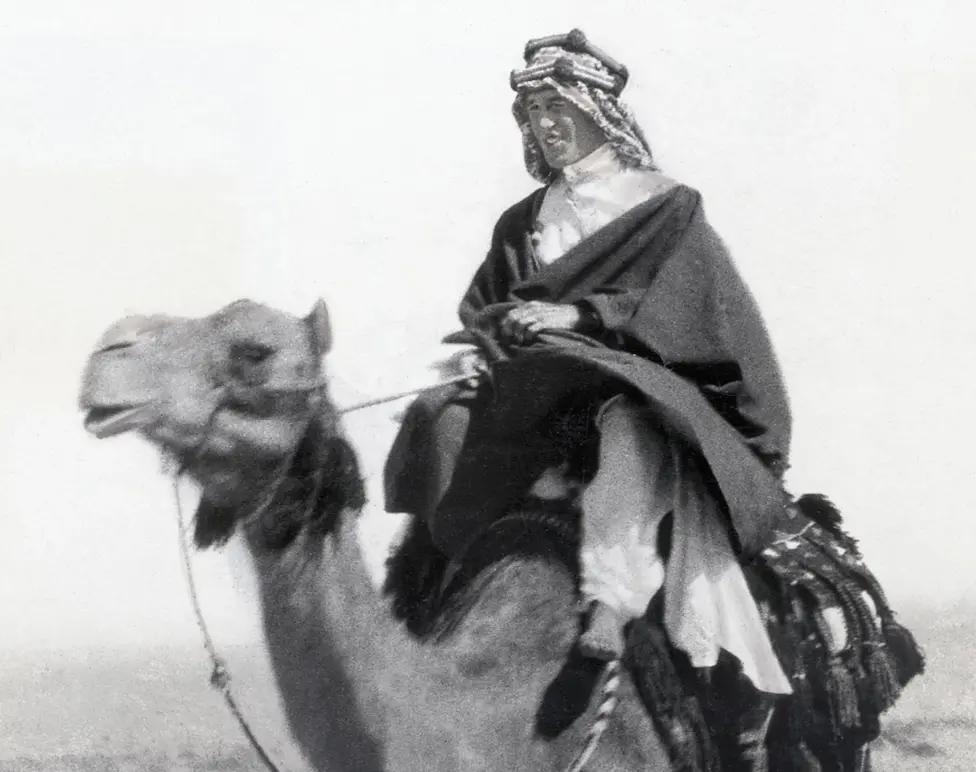
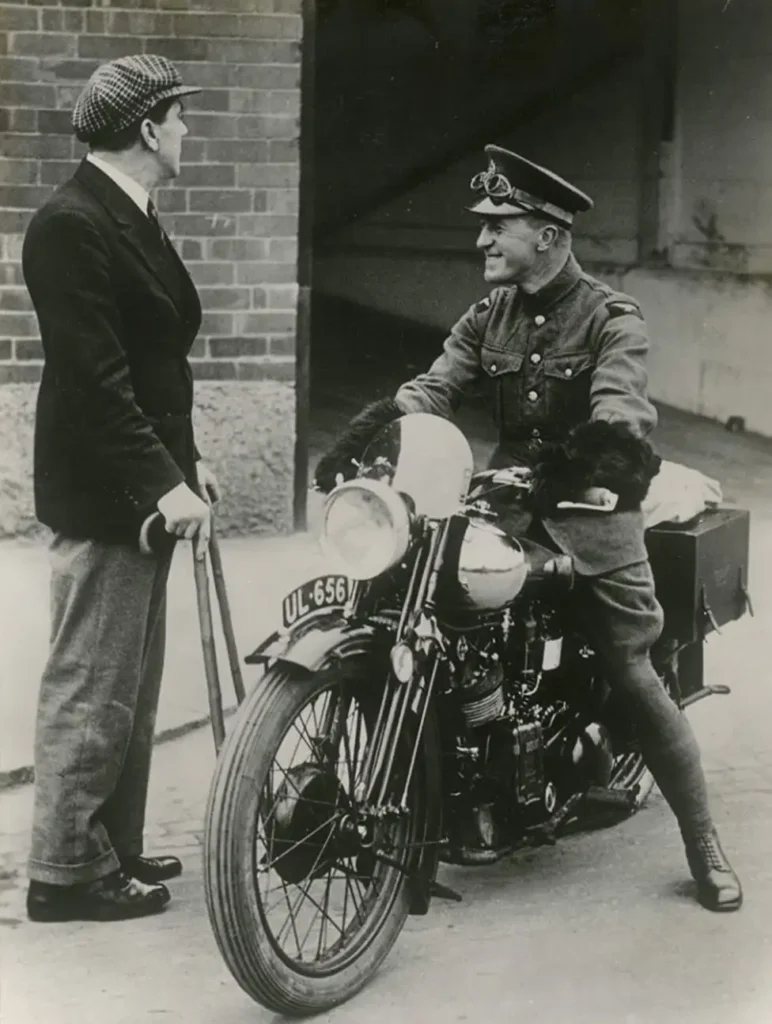
In his later life, he developed a powerful attachment to Brough Superior motorcycles. He owned at least seven machines, each tailored to his preferences, and used them as a form of escape from attention and obligation. They represented speed, control, and solitude – qualities sharply at odds with his public image.
During construction of his bikes he often specified adjustments to suit his preference for speed, precision and reliability over long distances. Their exceptional performance for the period made them ideal for his long, solitary rides. Their capacity for sustained high speed and mechanical dependability mattered as much to him as comfort or practicality. He valued the sense of control and isolation they provided, giving them pet names and describing them in deeply personal terms.
He said of one bike: “all this docile strength waits behind one tiny lever for the pleasure of my hand.” And of another: “Because Boa loves me, he gives me five more miles of speed than a stranger would get from him.”
This chapter ended in tragedy in 1935, when he suffered fatal injuries in a crash in Dorset after swerving to avoid two boys on bicycles while riding one of his Brough Superiors. He died days later, closing a life that had moved between desert warfare, diplomacy and retreat.
His legacy remains complex: a figure of extraordinary impact in irregular warfare and a man who spent his later years trying – never fully successfully – to separate himself from his legend.
The Brough Superior Club is the official organisation for the preservation and riding of vintage Brough machines. They support owners globally with a spares scheme, technical advice and regular get-togethers.
You can visit the Brough Superior Club here.
Revived by French designer Thierry Henriette, the legendary British brand continues to be hand-built today, using cutting-edge materials like titanium, billet aluminum and carbon fibre.