
Currently Empty: £0.00

Sabre: Hybrid Reconnaissance
- Home
- Sabre: Hybrid Reconnaissance
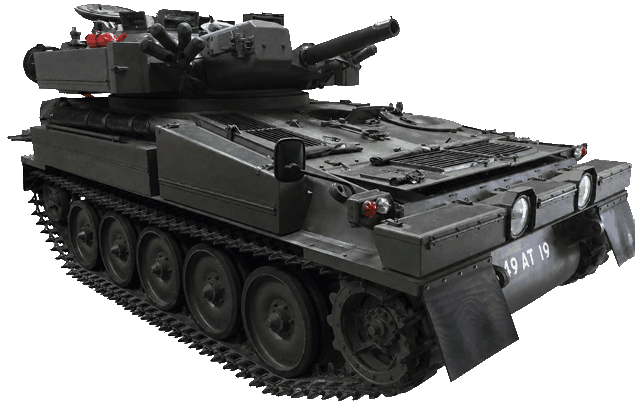
The CVR(T) Sabre represented speed, precision and tactical awareness – qualities that defined generations of cavalry soldiers and their machines.
To celebrate the legacy of one of Britain’s most distinctive and remarkable armoured reconnaissance vehicles, HAVOC Watches have created the HAVOC Sabre – combining military heritage with contemporary craftsmanship.
For more than a century, cavalry has performed one of the most important tasks on the battlefield: finding the enemy before the enemy finds you. While the image of cavalry is often associated with horses and sabres, modern armies have continued this tradition through fast, mobile armoured reconnaissance vehicles.
One of the most distinctive British examples was the Combat Vehicle Reconnaissance (Tracked) Sabre.
Small, fast and surprisingly powerful, the Sabre represented the final evolution of Britain’s highly successful CVR(T) family. Designed for reconnaissance in some of the most demanding battlefield conditions, it combined excellent mobility with a potent 30mm cannon, giving crews the ability not only to observe the battlefield but to fight when required.
The Sabre was introduced into service in the early 1990s, in the final years of the Cold War and at the beginning of a period of major change in military operations. Its role was not to replace heavily armoured tanks, but to perform a different and equally important task: moving ahead of larger formations, identifying threats, gathering intelligence and allowing commanders to make informed decisions.
This was the traditional cavalry role for the modern age.
The Sabre belonged to the Combat Vehicle Reconnaissance (Tracked) family, developed by British manufacturer Alvis from the 1960s onwards. CVR(T)s were built around a simple but very effective principle: reconnaissance vehicles did not need to be the largest or most heavily protected vehicles on the battlefield. They needed to be fast, discreet and able to operate where heavier armour could not.
This approach produced one of Britain’s most successful armoured vehicle families. The CVR(T) series included the FV101 Scorpion light tank, the FV107 Scimitar reconnaissance vehicle, the FV103 Spartan armoured personnel carrier, the Sultan command vehicle and several specialist variants. Thousands of these vehicles were produced to serve British forces and overseas operators around the world.
The Sabre was created by combining proven elements of two existing vehicles. Engineers mounted the turret of the FV721 Fox armoured reconnaissance vehicle onto the hull of the FV101 Scorpion light tank, creating a compact tracked reconnaissance vehicle with improved firepower. The result was a machine that retained the excellent handling and mobility of the Scorpion while gaining the more capable weapon system of the Fox.
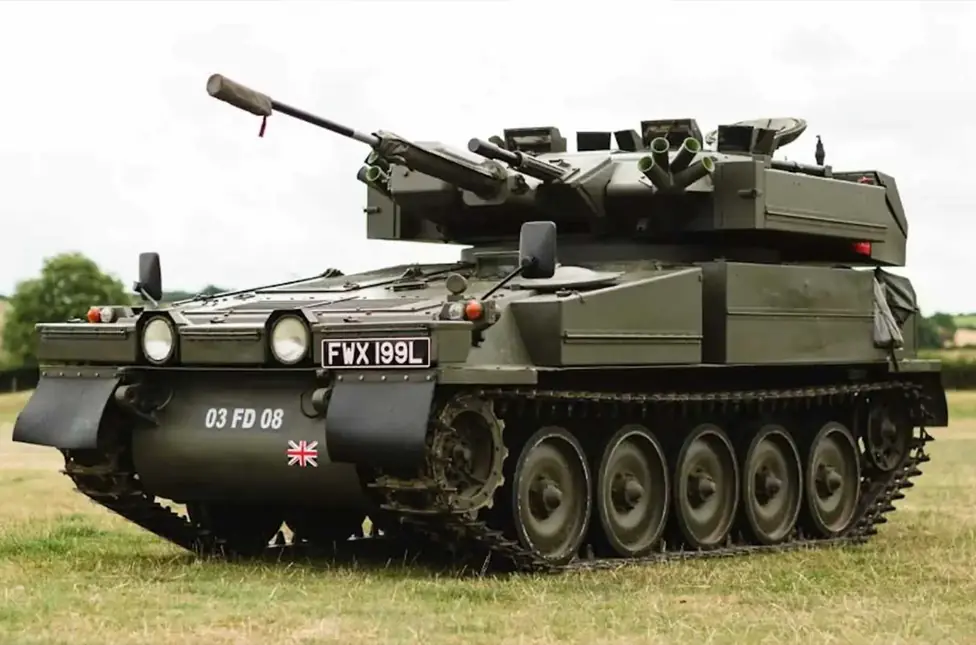
Its main armament was the 30mm RARDEN cannon, a weapon renowned for its accuracy and hitting power. Although the Sabre was much smaller than a main battle tank, the RARDEN gave it a serious punch against lightly armoured vehicles, enemy reconnaissance assets and defensive positions. It was supported by a 7.62mm machine gun, providing additional capability against infantry and close-range threats.
The Sabre’s greatest advantage was its combination of speed, size and firepower. Weighing approximately eight tonnes, it was light enough to cross terrain that would challenge heavier armoured vehicles. Its tracked suspension allowed it to move across mud, broken ground and difficult routes, while its compact profile made it harder for enemy forces to detect and engage.
For reconnaissance crews, this mobility was crucial. The Sabre could move quickly into forward positions, observe enemy activity, transmit information back to commanders and relocate before becoming exposed. In a fast-moving battle, the ability to see first could prove just as valuable as the ability to fire first.
Inside the vehicle, life was demanding. The three-person crew consisted of a commander, gunner and driver, working in a confined environment where teamwork and communication were essential. Reconnaissance soldiers needed confidence, patience and sharp judgement. They often operated ahead of the main force, where their observations could influence the decisions of entire formations.
The Sabre was not designed to fight enemy tanks in head-on engagements. Its strength was intelligence, speed and tactical flexibility. It could identify enemy movements, test positions, support larger armoured units and respond rapidly when situations changed. In this role, it represented the modern expression of a cavalry tradition that had existed for centuries.
During the Cold War, British reconnaissance forces trained extensively for a potential conflict in Europe. The threat of a major armoured confrontation between NATO and Warsaw Pact forces meant information gathering would have been vital. Units equipped with vehicles such as Sabre would be responsible for screening larger formations, monitoring enemy advances and providing early warning of attacks.
Although the large tank battles many expected never took place, the Sabre remained valuable during a period of changing military commitments. The end of the Cold War brought new challenges, with British forces increasingly involved in overseas operations, peacekeeping missions and rapid deployments. The need for mobile reconnaissance did not disappear; if anything, the ability to gather accurate battlefield information became even more important.
The Sabre was eventually withdrawn from British Army service in the early 2000s as newer technologies and vehicles began to reshape reconnaissance. Modern surveillance systems, improved communications and more advanced armoured platforms changed how armies gathered information, but the principles behind the Sabre remained unchanged.
Its legacy lies in what it represented: a highly mobile, adaptable armoured vehicle designed around the needs of the soldier. It was not built to dominate through size or brute force, but through speed, awareness and agility.
The CVR(T) Sabre was the final chapter in a remarkable family of British reconnaissance vehicles that served for decades. From the deserts of overseas deployments to the training areas of the Cold War, these compact tracked vehicles earned a reputation for reliability and effectiveness.
Fast, agile and armed with a weapon system capable of a powerful response when required, the Sabre was a fitting descendant of Britain’s cavalry tradition: move forward, find the enemy and provide the knowledge needed for victory.
CVR(T) SABRE SPECIFICATIONS
WEIGHT: 8.1 tonnes
LENGTH: 4.8m (15’9″)
WIDTH: 2.2m (7’3″)
HEIGHT: 2.2m (7’3″)
CREW: 3
MAIN ARMAMENT: 30mm L21 RARDEN cannon
SECONDARY ARMAMENT: L94 7.62mm chain gun
MAXIMUM SPEED: 80km/h (50mph)
The CVR(T) Sabre remains one of the most distinctive vehicles in Britain’s armoured history, and we are proud to honour its legacy with a premium timepiece inspired by its design, capability and service.
The HAVOC Sabre is a proud part of our collection – with a choice of seven Dial and Bezel colour combinations, it is the most personalisable watch in our catalogue.
To explore this iconic vehicle in greater detail: