
Currently Empty: £0.00

Scimitar: Fearsome Scout
- Home
- Scimitar: Fearsome Scout
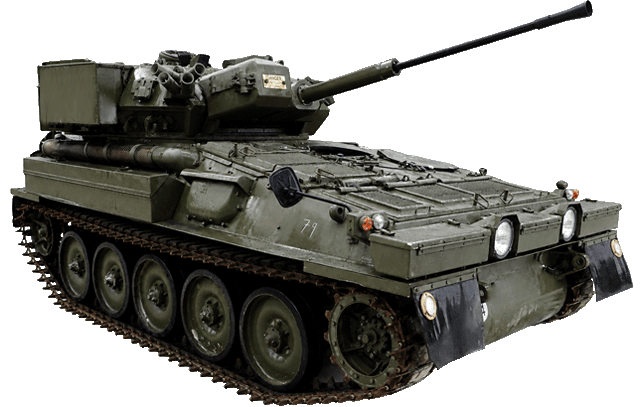
The CVR(T) Scimitar became a symbol of British armoured reconnaissance — a compact but formidable vehicle that served across deserts, mountains and some of the world’s most demanding battlefields.
To celebrate the legacy of this iconic machine, HAVOC Watches have created the HAVOC Scimitar – a precision timepiece inspired by decades of service, operational excellence and the enduring spirit of the soldiers who operated it.
Few British armoured vehicles have earned the affection and respect of soldiers quite like the CVR(T) Scimitar. Small enough to disappear into the landscape, fast enough to move ahead of armoured formations and armed with a powerful 30mm cannon, the Scimitar became one of the most successful reconnaissance vehicles of the modern British Army.
For more than 50 years, it served across some of the world’s most challenging environments. From the deserts of the Gulf War to the rugged terrain of Afghanistan, the Scimitar proved that a lightweight reconnaissance vehicle could still have a major impact on the battlefield.
The Scimitar’s story began with a simple military requirement: armies needed a vehicle that could see without being seen. While tanks provided the power needed to break through enemy positions, commanders also needed accurate information about what lay ahead. Where was the enemy? How strong were their defences? Which routes were safe for advancing forces?
These questions were answered by reconnaissance troops, the modern descendants of traditional cavalry scouts. Their role was not simply to fight, but to gather intelligence, identify threats and give commanders the advantage of knowledge.
The answer developed by Britain was the Combat Vehicle Reconnaissance (Tracked) family, known as CVR(T). Designed by British manufacturer Alvis, the family was created during the 1960s and focused on mobility, reliability and versatility. Rather than building large, heavily armoured vehicles, designers produced a series of compact tracked vehicles capable of operating across difficult terrain and supporting a wide range of battlefield roles.
The CVR(T) family included several famous vehicles, including the FV101 Scorpion light tank, FV103 Spartan armoured personnel carrier, FV104 Samaritan ambulance, and the FV107 Scimitar reconnaissance vehicle. Each used the same basic chassis design but was adapted for a different purpose.
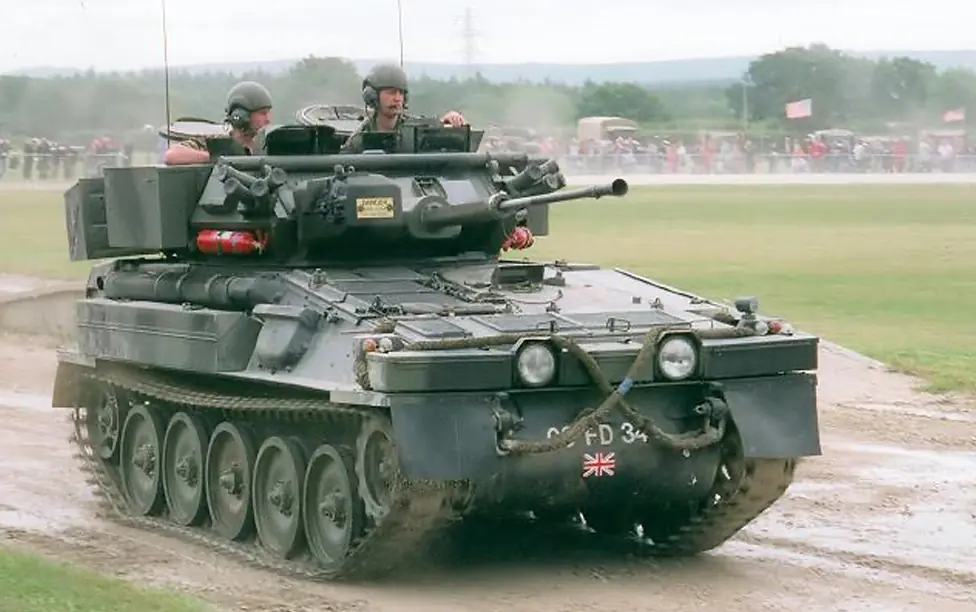
The Scimitar entered British Army service in the early 1970s, following the successful development of the Scorpion. At first glance, the two vehicles looked almost identical, but their roles were very different. The Scorpion was designed as a light tank, armed with a 76mm gun, while the Scimitar was built specifically for reconnaissance and carried the impressive 30mm L21 RARDEN cannon.
That weapon gave the Scimitar a remarkable capability for a vehicle weighing less than eight tonnes. The RARDEN cannon could engage lightly armoured vehicles, enemy reconnaissance units and fortified positions, giving crews the ability to defend themselves if a scouting mission turned into a fight. It was supported by a coaxial 7.62mm machine gun and smoke grenade launchers, allowing the vehicle to manoeuvre and disengage when required.
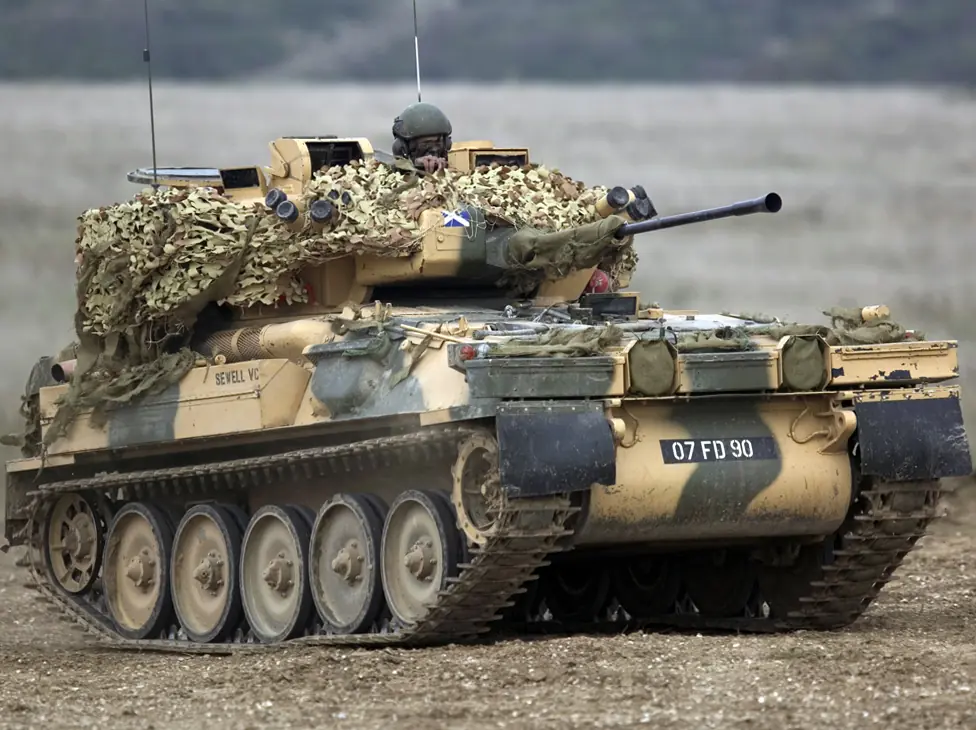
The Scimitar’s greatest strength was its mobility. Powered by a compact engine and built on a tracked chassis, it could reach speeds of around 50mph while crossing terrain that would challenge heavier armoured vehicles. Its low profile made it difficult to detect, while its speed allowed crews to move quickly, gather information and relocate before attracting enemy attention.
Inside the vehicle, conditions were challenging. The crew consisted of three soldiers: a commander, gunner and driver. Space was extremely limited, and every crew member had to work efficiently. Reconnaissance required patience and concentration. A Scimitar crew might spend hours watching enemy activity before making a rapid movement to a new position.
This combination of observation and aggression made the Scimitar a perfect example of modern cavalry. It could move ahead of larger forces, identify enemy positions and, if necessary, strike with surprising force before disappearing again.
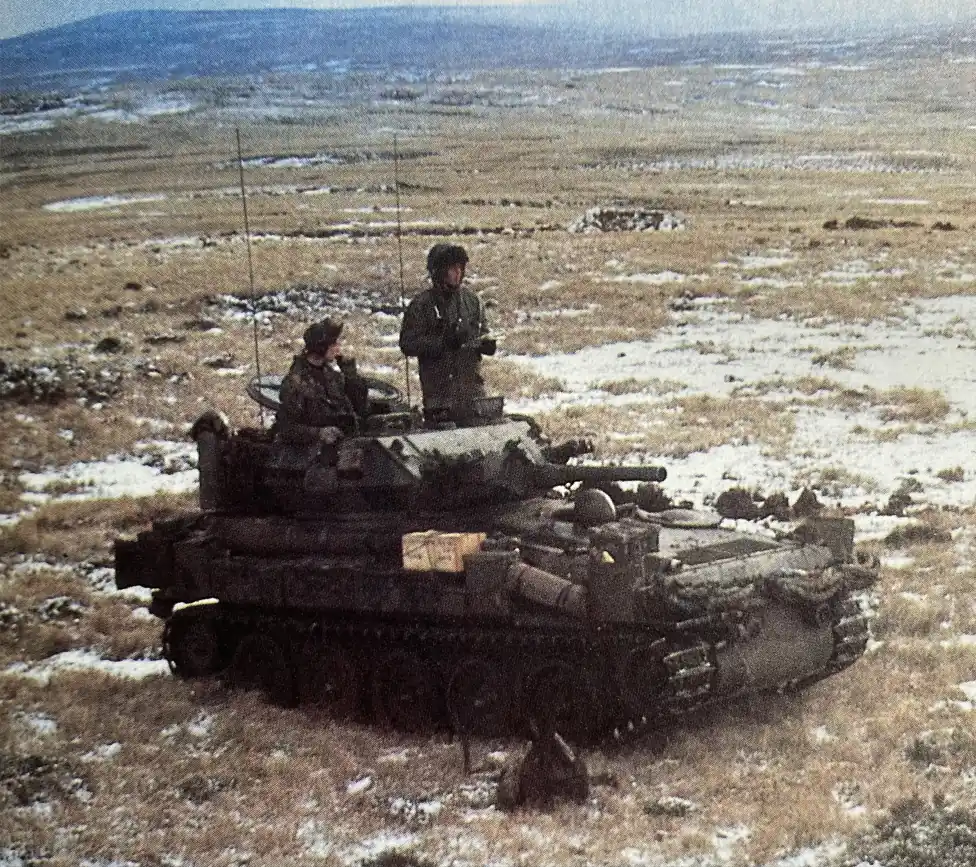
The vehicle’s first major combat test came during the Falklands War in 1982. British armoured reconnaissance vehicles, including Scimitars, played an important role during the campaign’s land operations. The difficult terrain of the Falklands was a challenging environment, but the Scimitar’s mobility allowed it to operate where heavier vehicles could not. Its reliability and firepower proved valuable during the advance towards Stanley.
The Scimitar gained even greater recognition during the 1991 Gulf War. Operating in the open desert environment of Iraq and Kuwait, the vehicle was ideally suited to a war of movement. British armoured reconnaissance units used Scimitars to screen advancing formations, locate enemy positions and support the rapid Allied advance.
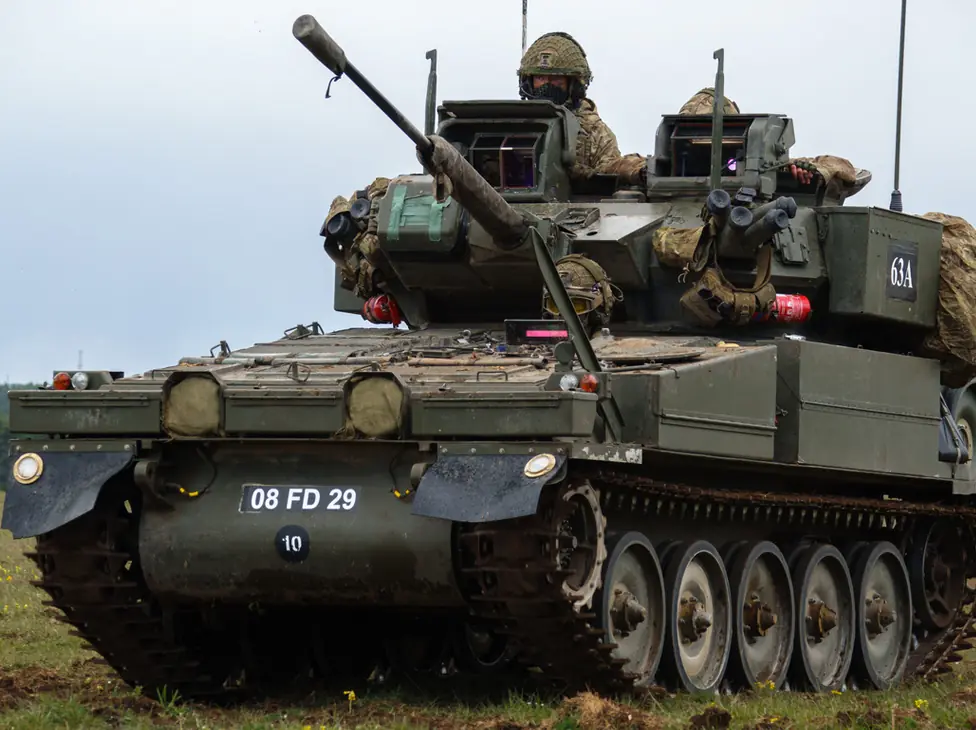
One of the most remarkable aspects of the Gulf War was the way relatively small reconnaissance vehicles operated alongside much larger armoured forces. The Scimitar was not designed to fight enemy tanks, yet its accurate 30mm cannon gave crews a valuable capability against lighter armoured threats. In fast-moving desert battles, speed and information were often just as important as armour protection.
The Scimitar continued to prove itself after the Cold War ended. It served in the Balkans during peacekeeping operations, where its mobility and presence helped provide security in difficult environments. Later, during operations in Iraq and Afghanistan, the vehicle adapted once again to new challenges.
Afghanistan presented a very different battlefield from the wide-open deserts of the Gulf. Roads, villages and mountainous terrain created new threats, particularly from improvised explosive devices. To meet these challenges, upgraded versions of the CVR(T) family received improved armour, protection systems and other modifications to extend their service life.
The fact that a design from the 1970s remained useful decades later was a testament to the quality of the original concept. The Scimitar was never the heaviest or most technologically advanced armoured vehicle, but it possessed speed, agility and the ability to gather information in dangerous environments.
For generations of British armoured soldiers, the Scimitar became more than just a vehicle. Its distinctive shape, compact size and unmistakable engine noise made it instantly recognisable. It became a symbol of British reconnaissance — a vehicle built for crews who operated ahead of the main force and accepted the risks that came with seeing the battlefield first.
After more than half a century of service, the Scimitar was finally withdrawn from the British Army in 2023, ending one of the longest careers of any British armoured vehicle. Its replacement represents a new era of reconnaissance technology, but the principles that made the Scimitar successful remain unchanged.
The legacy of the CVR(T) Scimitar lies in its remarkable balance of speed, firepower and versatility. It was small, but it was never insignificant. It was lightly armoured, but it was never lightly regarded. Across deserts, mountains and training grounds around the world, the Scimitar proved that knowing where the enemy was could be just as important as defeating them.
For over five decades, the Scimitar carried Britain’s cavalry tradition into the modern age – a fast, fearless and highly capable machine that earned its place among the most respected armoured vehicles in British military history.
CVR(T) SCIMITAR SPECIFICATIONS
WEIGHT: 7.8 tonnes
LENGTH: 4.9m (16’1″)
WIDTH: 2.2m (7’3″)
HEIGHT: 2.1m (6’11”)
CREW: 3
MAIN ARMAMENT: 30mm L21 RARDEN cannon
SECONDARY ARMAMENT: L37A1 7.62mm chain gun
MAXIMUM SPEED: 80km/h (50mph)
The CVR(T) Scimitar remains one of the most recognisable vehicles in Britain’s armoured history, earning a reputation for reliability, versatility and service across some of the world’s most challenging environments. We are proud to honour its legacy with a timepiece inspired by the design, engineering and enduring spirit of this remarkable reconnaissance vehicle.
The HAVOC Scimitar is a distinctive addition to our collection, created as a lasting tribute to the soldiers who operated this legendary machine and the decades of service it represents.
To explore this iconic vehicle in greater detail: