
Currently Empty: £0.00

JTAC – Precision from Above
- Home
- JTAC – Precision from Above
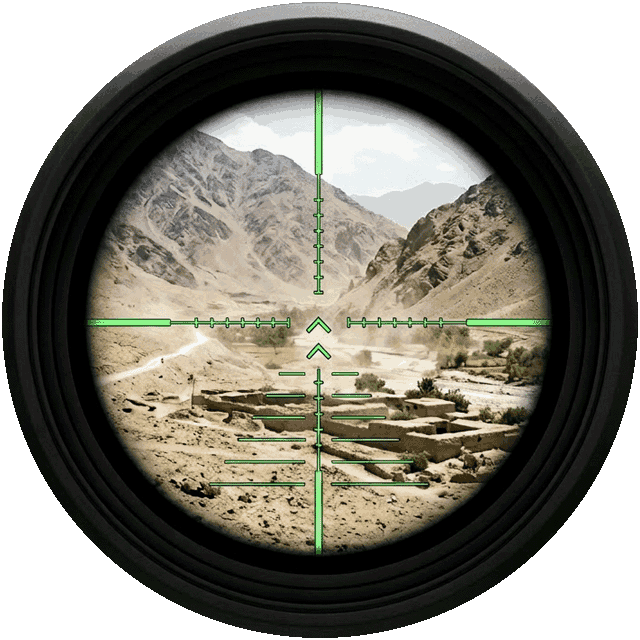
HAVOC Watches are thrilled to have created a timepiece inspired by Joint Terminal Attack Controllers – professionals who coordinate close air support in some of the most demanding fields of conflict.
JTACs are specialist operators who link air assets with troops on the ground, guiding aircraft onto targets during active operations. They work in fast-changing environments where timing and accuracy are critical, ensuring that aerial support is delivered effectively and safely in coordination with wider battlefield activity.
Joint Terminal Attack Controllers (JTACs) are responsible for directing aircraft in support of ground forces. Their role is to ensure that close air support is accurately delivered, authorised and fully coordinated with troops on the ground.
JTACs are embedded with frontline units including infantry, armoured regiments and special forces. From these positions, they communicate directly with aircraft such as fast jets and attack helicopters, identifying targets, confirming them under strict rules of engagement, and guiding pilots to the correct objective. They use secure radios and laser designators to mark targets and improve accuracy, particularly in situations where friendly forces are operating close to enemy positions.
A key part of the role is managing the use of airspace above the battlefield. JTACs coordinate aircraft movements alongside artillery fire and ground manoeuvres to ensure that all elements can operate in the same area safely and effectively, without conflict between different systems or risk to friendly forces.
In British service, JTACs are drawn from experienced soldiers and undergo a demanding qualification process. Training covers aircraft capabilities, weapons effects, targeting procedures, airspace control, and communications systems. Qualification is achieved through live close air support exercises, where candidates control real aircraft delivering live ordnance in controlled training environments.
JTACs played a significant role in operations in Iraq and Afghanistan, where close air support was frequently required in complex terrain and rapidly changing combat situations. Their ability to integrate air power directly into ground operations remains a key capability in modern British and NATO forces.
Today, JTACs are a critical component of Joint Fires Doctrine, ensuring that air power is applied effectively and safely across high-intensity environments.
Joint Fires Doctrine
Joint Fires Doctrine is the system used to plan and coordinate indirect and supporting firepower on the battlefield. It brings together artillery, mortars, close air support, attack helicopters, and other supporting weaponry so they are used together in a controlled coordinated way. This maximises combat effectiveness and, just as importantly, protects friendly forces.
Rather than treating each capability separately, Joint Fires Doctrine combines them to achieve a single tactical effect. For example, artillery may be used to suppress enemy positions, while aircraft strike hardened targets, and mortars provide immediate close support to advancing troops. These effects are planned together so they support each stage of the operation.
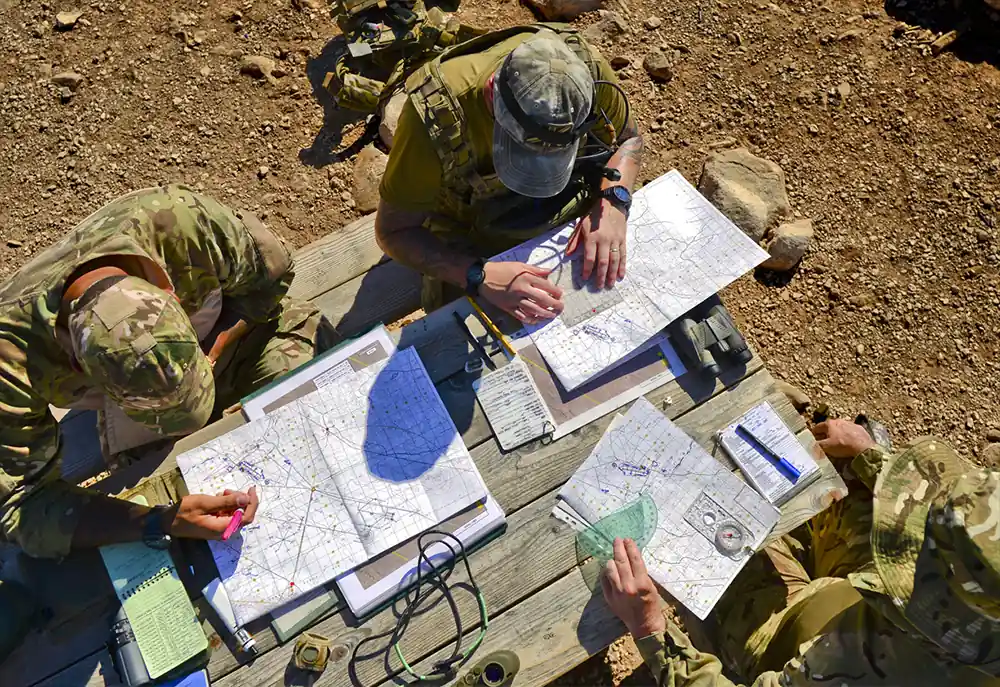
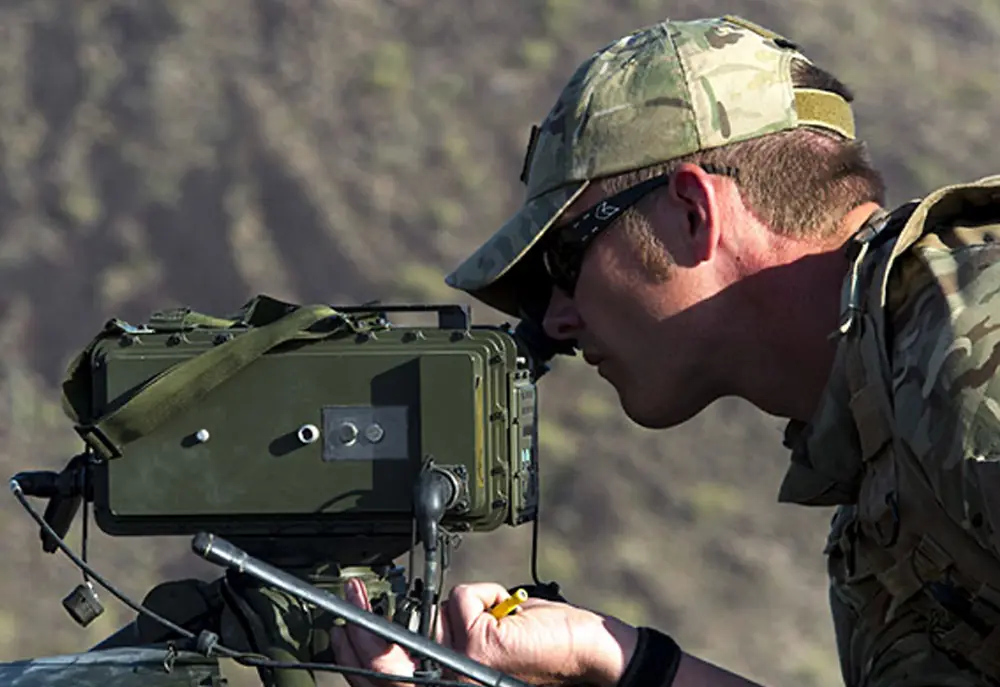
Coordination is managed through a network of support teams, JTACs and command elements who work from a shared operational picture. This ensures missions are properly authorised, accurately targeted, and timed to support ground movement.
A principal requirement of Joint Fires is airspace coordination. With aircraft, artillery trajectories, and unmanned systems often operating in the same area, strict control measures are used to prevent friendly fire incidents and ensure safe separation. These include defined control areas, targeting procedures and coordination lines used by all units involved.
In modern British Army and NATO operations, Joint Fires is fully integrated into combined arms warfare. It is planned alongside manoeuvres, intelligence, surveillance and reconnaissance. This combines different capabilities in a way that produces a greater overall effect than any single system could achieve alone.
CLEARED HOT!
“Cleared hot” is the definitive, mandatory radio command issued by a JTAC which grants military aircraft clearance to engage a target. This critical phrase, emblazoned on the HAVOC JTAC watch, authorises a pilot to begin their attack run and deploy weapons. It is used under strict rules of engagement following a precise sequence of events:
THE 9 LINE BRIEF: The JTAC relays a standardised tactical briefing to aircrew with target coordinates, elevation, attack geometry and restrictions.
READBACK: The pilot confirms the critical data to ensure total accuracy and situation awareness.
FINAL AUTHORISATION: Once the JTAC ensures the attack aligns with the ground commanders intent and minimises collateral damage, they grant final release clearance with the “Cleared Hot” command.
The JTAC role in Afghanistan
During operations in Afghanistan, particularly in Helmand Province between the mid-2000s and early 2010s, JTACs played a critical role in coordinating close air support for British and coalition forces in some of the most heavily contested areas of the campaign. Fighting was often made up of small-unit engagements, ambushes, and complex attacks on patrol bases and checkpoints, where troops could come under sustained fire in difficult terrain and built-up compounds.
In areas such as Sangin and Musa Qala, British units regularly operated in close contact with insurgent forces, often with limited cover and stretched communications. In these conditions, JTACs were the link between troops on the ground and fast jets, attack helicopters, and surveillance aircraft overhead. When a patrol came under fire, JTACs identified enemy firing points, confirmed their position using maps, digital systems, and laser equipment, and directed air strikes to suppress or destroy those threats.
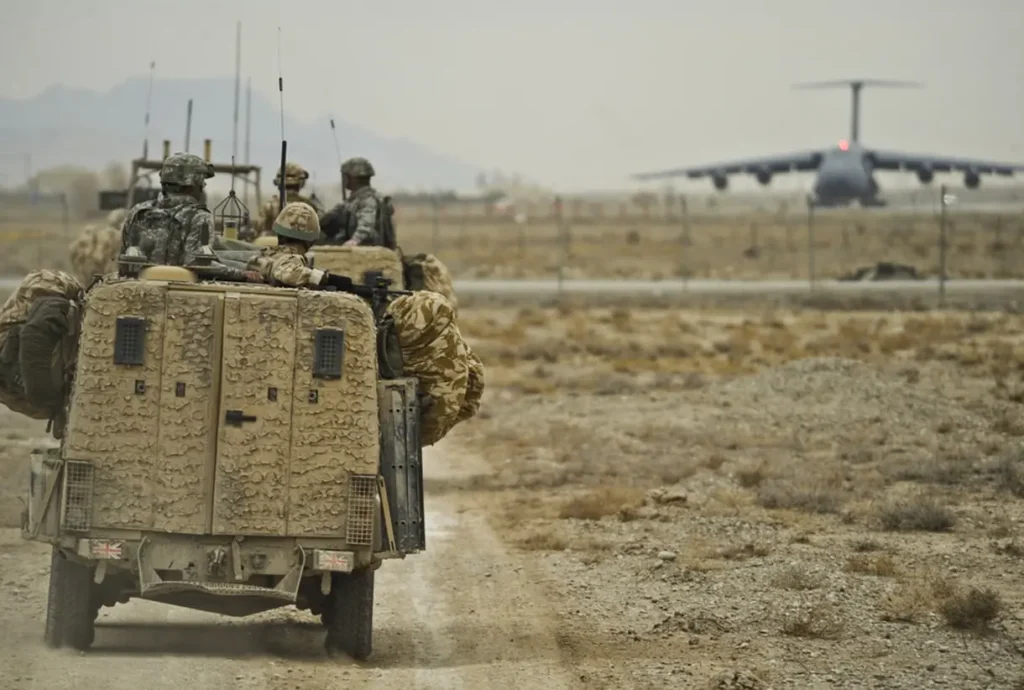
Speed and accuracy were critical. Air support often had to be brought in within minutes, sometimes while friendly forces were still under fire or moving to better positions. JTACs had to keep updating aircraft as the situation changed on the ground, making sure strikes were accurate and safe even when troops were close to enemy positions. Often, they controlled more than one aircraft at the same time, including fast jets and attack helicopters, while using surveillance feeds to keep track of what was happening.
These operations often took place in areas where insurgents used complex terrain, compounds, and irrigation networks to move between firing points and avoid detection. JTACs had to take into account civilian presence, strict rules of engagement, and fast-changing distances between friendly and enemy forces.
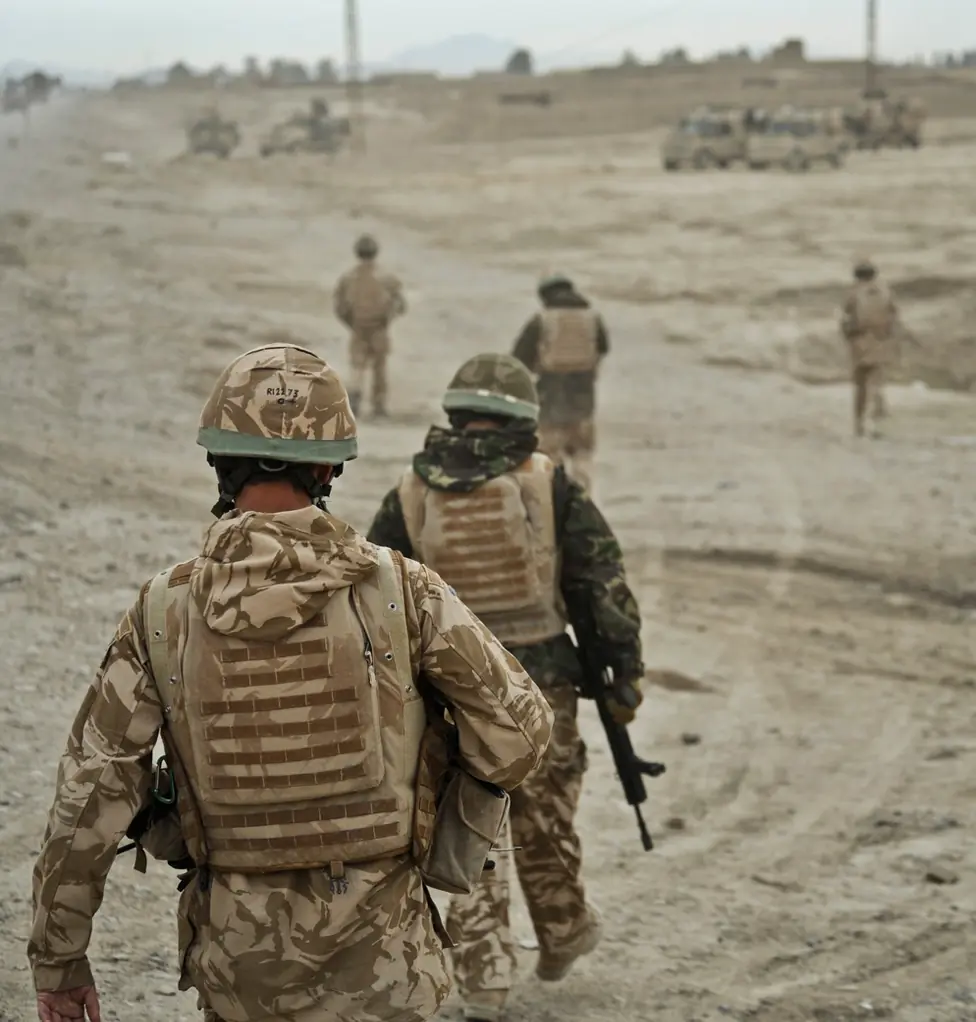
The effectiveness of JTACs in Afghanistan helped shape modern British and NATO close air support methods. Their ability to bring air power directly into small-unit combat allowed ground forces to stay in contact with the enemy while reducing exposure during prolonged firefights. It also reinforced the need for close coordination between air and ground elements in conflicts where enemy forces were mobile and used terrain for cover.
By the later stages of the campaign, JTACs were a standard part of deployed British formations, embedded directly within frontline units. Their work in Afghanistan remains a clear example of how close air support became a fully integrated part of modern ground operations, and how precise air control became a core battlefield capability.
In Afghanistan, close air support became a routine part of British operations, particularly during sustained fighting in Helmand Province where ground troops frequently engaged with insurgent forces. The scale and intensity of these engagements drove the need for tighter coordination between air and land elements, shaping how support was delivered in real time.
Discover more at the Imperial War Museum here.
In British operations, close air support and air-land coordination are governed by established Ministry of Defence doctrine and procedures that set out how air power is integrated with ground forces.